What Trailer Wiring Harness Do I Need for My Vehicle and Trailer?
Home » What Trailer Wiring Harness Do I Need for My Vehicle and Trailer?
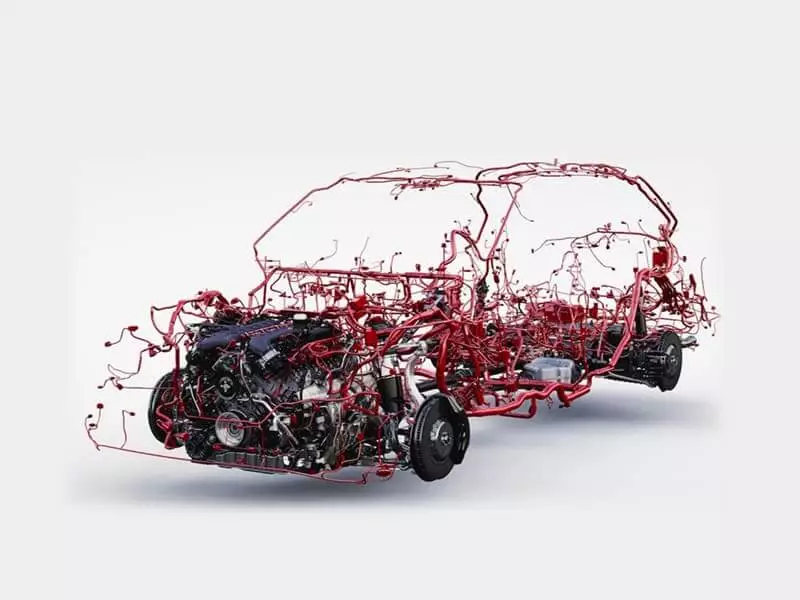
A trailer wiring harness serves as the critical link between a vehicle’s electrical system and the trailer’s lights and brake signals. Choosing the wrong wiring harness can cause tail lights to flicker, brake lights to fail, or even lead to the vehicle catching fire or a safety incident.
With such a wide variety of wiring harnesses available on the market—ranging from 4-pin flat connectors to 7-pin RV connectors, and from plug-and-play to hard-wired types—we understand that you, like many car owners, may find it difficult to accurately determine which specifications are required for your vehicle and trailer.
This article will address these key points to help you develop a comprehensive approach to selecting the right trailer wiring harness.
What trailer wiring harness do I need?
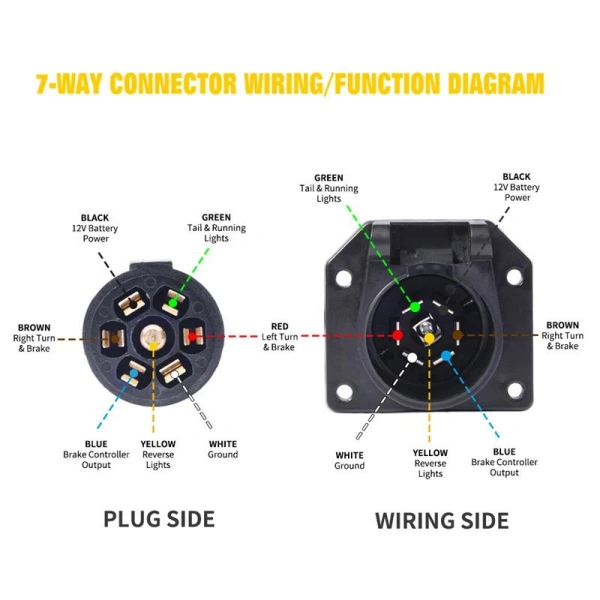
To determine which type of tow harness you need, the following “four checks” will help you figure it out:
1. Determine which electrical features your trailer requires
A basic 4-pin trailer wiring harness can handle taillights, brake lights, and left and right turn signals. The 4-pin system includes: ground, taillight/parking light, left turn/brake, and right turn/brake, and is suitable for light-duty trailers.
However, if your trailer has additional features such as an electronic brake system, reverse lights, or an auxiliary 12V power supply, you’ll need a 7-pin harness. A 7-pin harness can provide connections for more independent circuits. You should first list the features your trailer actually needs, then determine the number of pins.
2. Consider the type of electrical system in your vehicle
In older vehicle models, the tail light circuit can draw power from the vehicle’s original lighting circuit. However, many modern vehicles use body electronic systems such as CAN bus, which are not suitable for simply connecting trailer loads in parallel with the tail light circuit.
In such cases, you may need a converter with an independent power supply or a vehicle-specific trailer control module. Its function is to ensure that the vehicle provides only control signals, while the actual current required by the trailer lights is supplied by an independent power source, thereby reducing the risk of directly increasing the load on the vehicle’s original lighting circuit.
Tip: For specific vehicle models, whether a module is required cannot be determined solely by the “age” of the vehicle; it is best to confirm this based on the vehicle manufacturer’s trailer interface design or the model compatibility information provided with the wiring harness kit.
3. Check whether the connectors on the vehicle and trailer ends match
It’s important to note that “the same number of pins” does not necessarily mean they can be connected directly. Different regions, vehicle models, and trailer systems may use different types of connectors. You need to confirm that the number of pins, plug type, pin assignments, and circuit functions of the vehicle’s socket and the trailer’s plug all match.
For example, just because your trailer uses a 7-pin connector doesn’t mean you can use a 7-pin trailer harness. Before purchasing, you need to check the product’s wiring diagram and understand the function of each pin.
4. Check whether your vehicle already has a factory-installed towing interface
If your vehicle is equipped with a factory tow package or has a dedicated towing socket, you should prioritize a model-specific wiring harness and avoid rerouting the wiring from the taillights.
If your vehicle does not have a pre-installed interface, you’ll need to select a universal wiring harness, an adapter, and the appropriate power supply and fuse protection solution based on your vehicle’s lighting circuit and towing requirements.
Start with the trailer functions you must support
When selecting a trailer wiring harness, first determine the electrical features your trailer requires.
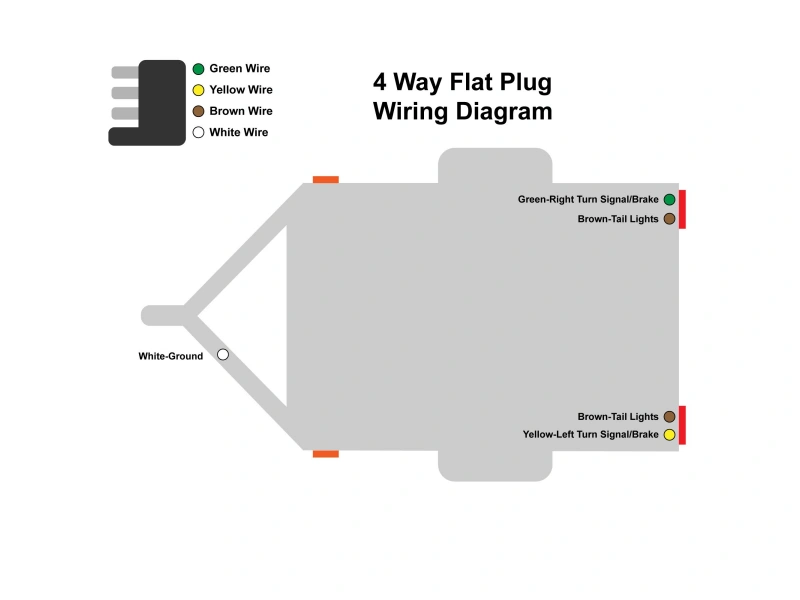
A. Determine if your trailer requires only basic lighting
If your trailer has only taillights, parking lights, a left turn/brake light, and a right turn/brake light, it is considered a basic lighting trailer.
A 4-pin system typically meets these requirements. The 4-pin connection includes ground, taillights/parking lights, left turn/brake, and right turn/brake.
Note that “4-pin” here refers to the number of independent circuits the connector can provide; it does not mean the trailer can only have four lights installed.
B. With electric braking, the braking circuit must be taken into account
Electric brakes refer to a system where the vehicle controls the trailer’s brakes via an electrical signal, rather than relying solely on the vehicle’s brake light signal.
A 7-pin trailer connector can provide this additional circuit, and a 7-pin system is commonly used in many trailer applications with electronic braking.
Here is a very important point to note: Do not confuse “brake lights” with “electronic trailer braking.” Brake lights are meant to signal to vehicles behind that “the vehicle is braking.” Electronic braking, on the other hand, requires sending the appropriate control signals to the trailer’s brakes.
C. Reverse Lights: Check for a Dedicated Reverse Circuit
Some trailers are equipped with reverse lights. These lights illuminate the area behind the trailer or serve as a reverse warning when the vehicle is shifted into reverse. If your trailer has reverse lights, you’ll need to verify that the vehicle-to-trailer connection system provides a dedicated circuit for them.
When checking the trailer’s features, you can simply inspect the rear of the trailer: Are there reverse lights? Are there corresponding light fixtures and wiring? If not, there’s no need to add a dedicated circuit for a feature that doesn’t exist.
D. If auxiliary power is required, treat it as a separate requirement
Some trailers require not only lighting but also 12V auxiliary power, such as to power certain electrical devices on the trailer.
Such power circuits and lighting signal circuits cannot simply be treated as “just adding another wire.” Auxiliary power may carry a higher current than standard lighting signals, so you need to consider wire gauge, fuse protection, grounding, connector ratings, and the vehicle’s power supply method simultaneously.
Important note: Do not simply connect a 12V device on the trailer in parallel with one of the vehicle’s lighting wires just because it’s present. Lighting signal wires and power wires serve different purposes and have different electrical designs.
Match the connector on the vehicle and trailer
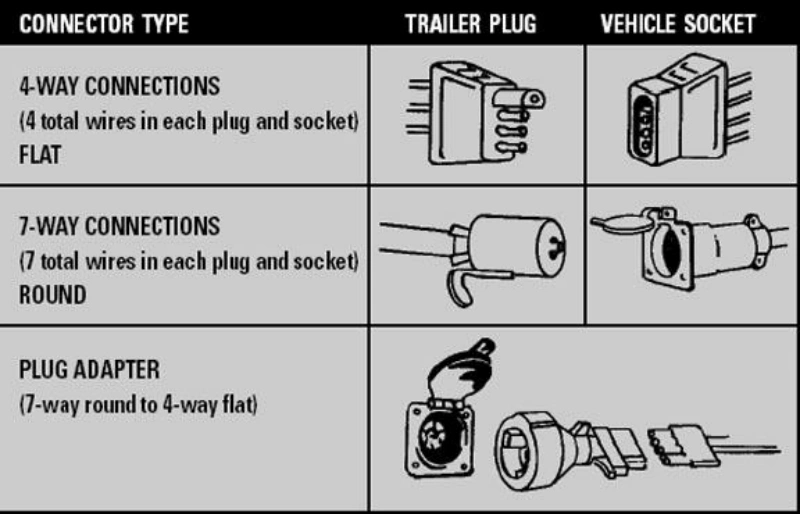
When selecting a trailer wiring harness, you need to verify the connector type, number of pins, pin layout, and the electrical function of each pin on both the vehicle end and the trailer end.
1. Identify the connector type on the vehicle end
Inspect the trailer socket at the rear of the vehicle. It is responsible for transmitting the vehicle’s lighting, braking, and auxiliary power circuits to the trailer.
Don’t just look at the socket’s appearance. Whether it’s a 4-pin or 7-pin connector, the number of pins is only surface-level information. You also need to confirm the type of connector and the function of each pin.
If the vehicle is already equipped with a factory-installed trailer interface, it may be more reliable to select the corresponding wiring harness based on the connection information provided by the vehicle manufacturer.
2. Identify the connector type on the trailer end
Inspect the trailer plug on the trailer. It connects to the vehicle’s socket and transmits electrical signals from the vehicle to the trailer.
The most important thing here is to confirm whether the trailer plug and the vehicle socket belong to the same connection system and whether the pin functions match.
For example, if your trailer uses a 7-pin plug and your vehicle has a 7-pin socket, this only indicates that they appear to match in terms of the number of pins. You still need to verify the pin assignments.
3. Just because it plugs in doesn’t mean it’s electrically compatible
Mechanical fit refers to the ability of a plug and socket to connect based on their physical dimensions, shape, and locking mechanisms; electrical compatibility refers to the ability of each circuit to function correctly after connection.
True compatibility:
• Correct connection
• Consistent pin layout
• Corresponding pin functions
• Voltage/circuit requirements met
• Both the vehicle and trailer functions operate normally
It is not recommended to purchase a wiring harness based solely on the plug’s appearance or the fact that “they are both 7-pin.”
4. Verify Pin Definitions
The wiring diagrams for the vehicle and trailer are one way to determine whether the connectors are compatible.
You need to confirm:
• The function of each pin
• Whether an electronic brake circuit is present
• Whether a reverse light circuit is present
• Whether an auxiliary power circuit is present
Different connector systems and application environments may use different pin definitions; you should refer to the wiring diagrams provided by the vehicle, trailer, or specific connector manufacturer.
5. The connectors on the vehicle and trailer are different
Vehicles and trailers use different types of connectors, so you cannot simply connect the wires on both ends by matching their colors.
You need to determine whether the connector types and circuit functions are the same, as well as the electrical systems on both ends.
If the only difference is the connector type, a suitable adapter may resolve the issue in some cases. However, if the trailer requires features not provided by the vehicle—such as electric brakes or auxiliary power—a simple adapter may not be sufficient.
Check vehicle-specific compatibility
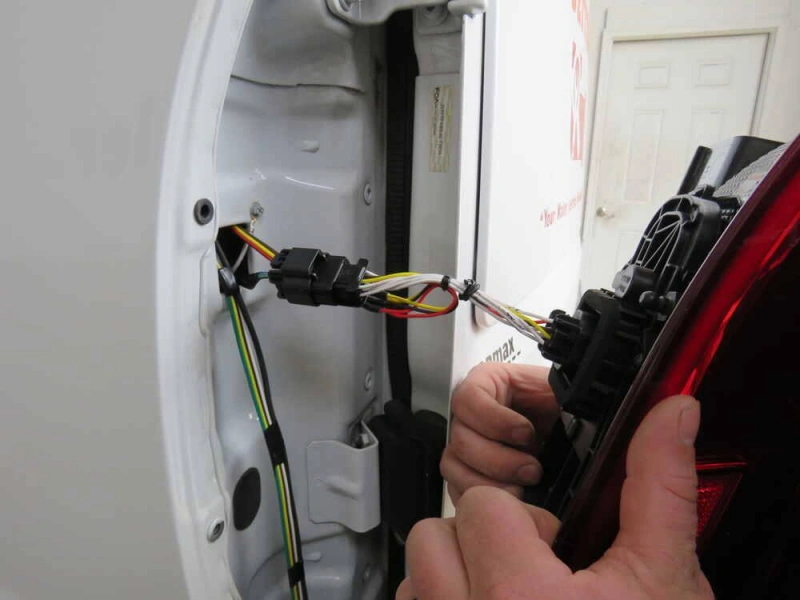
Checking vehicle-specific compatibility is also an important step when selecting a trailer wiring harness.
What is vehicle-specific compatibility?
Vehicle-specific compatibility refers to whether the trailer wiring harness you purchase is properly matched to your vehicle’s electrical system, connector types, and electronic control methods.
Why is vehicle compatibility important?
Because modern vehicles are no longer simply a matter of light bulbs and switches; they are managed by multiple electronic control units working together.
Many new vehicle models now use CAN bus technology. Systems such as lights, instrument panels, and brakes are controlled via electronic modules, rather than through traditional direct power supply methods.
If you directly connect the trailer light load to the vehicle’s original taillight circuit, you may encounter issues such as warning lights, blown fuses, or abnormal trailer light operation.
In such cases, you’ll need to use a Powered Converter or a Trailer Control Module.
How to Determine If Your Vehicle Needs a Dedicated Wiring Harness?
Scenario 1: The Vehicle Has a Factory-Installed Towing Connector
Pickup trucks, SUVs, and other vehicles with strong towing capabilities may come equipped with a dedicated towing connector at the rear of the vehicle.
You can choose from a factory wiring harness, a model-specific wiring harness, or a kit that directly matches the factory connector.
How to Check:
- Review the vehicle owner’s manual and towing specifications
- Check near the rear bumper to see if there is a pre-installed connector
- Check if the vehicle is equipped with a Tow Package
Scenario 2: The Vehicle Does Not Have a Pre-Installed Connector
If the vehicle does not have a factory-installed towing connector, you need to determine:
- Whether the vehicle uses a traditional electrical system or an electronic control system.
- Older models may allow direct access to the lighting signals.
- Newer models may require a signal converter, a towing module, a separate fuse-protected power supply, and so on.
What Information Determines Compatibility?
Before purchasing a towing harness, you need to confirm the following information:
• Vehicle brand
• Model
• Model year
• Engine configuration
• Whether the vehicle comes with a factory-installed towing package
• Type of existing towing connector
• Required towing functions
Choose custom-fit, splice-in or universal wiring
Wiring harness installation can be categorized into custom-fit, splice-in, and universal wiring. The difference between these three methods lies in how they connect to the vehicle’s original electrical system.
| Wiring Type | Meaning | Connection Method | Best For | Key Advantage |
|---|---|---|---|---|
| Custom-Fit Wiring | Vehicle-specific harness | Connects to the vehicle's factory wiring or dedicated trailer connector. | Vehicles with factory trailer connectors, pre-wiring, or a confirmed vehicle-specific harness. | Easy installation with minimal wire cutting and fewer wiring errors. |
| Splice-In Wiring | Spliced harness | Splices into existing tail light, turn signal, or brake light circuits. | Vehicles without a dedicated trailer connector but with identifiable lighting circuits. | Broad compatibility without requiring a factory connector. |
| Universal Wiring | Universal harness | Uses general-purpose wiring connected according to the vehicle's electrical system. | When no vehicle-specific harness is available or one harness must cover multiple models. | Flexible and widely applicable. |
How to Choose Among Three Types of Wiring Harnesses
| Your Vehicle | Recommended Solution | Why Choose It |
|---|---|---|
| Factory trailer connector or pre-wiring available | Custom-Fit | Matches the factory interface for a more direct installation. |
| Vehicle-specific harness available for the exact make, year, and trim | Custom-Fit | Better vehicle compatibility with less modification to the factory wiring. |
| No dedicated connector, but lighting circuits can be clearly identified | Splice-In | Connects to the vehicle's existing circuits through properly sealed splices. |
| No vehicle-specific product available and multiple models need to be covered | Universal | Offers broader compatibility and greater installation flexibility. |
| Modern vehicle with a complex electronic system | Custom-Fit / Dedicated Module | Direct splicing may not be suitable; verify the vehicle's electrical system first. |
| No vehicle-specific harness can be found | Universal or Splice-In | Choose based on the vehicle's circuit design and installation conditions. |
Choose harness construction for the environment
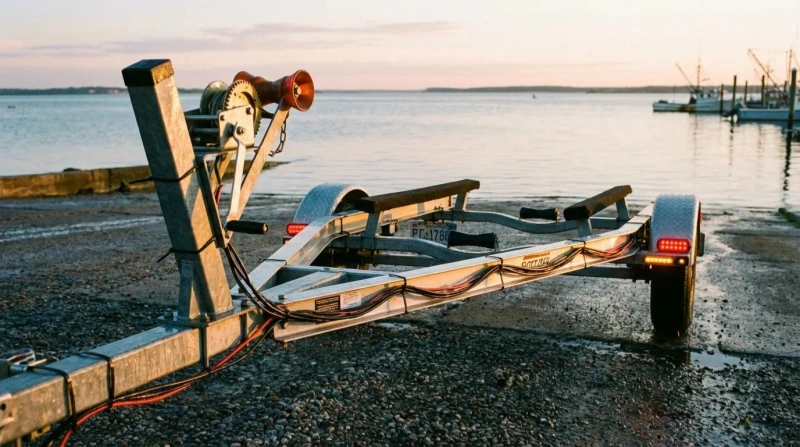
When selecting a trailer wiring harness, you should also consider the actual environmental conditions the harness will be exposed to.
1. Determine the trailer’s operating environment
For harnesses frequently used in rainy conditions, on muddy roads, near the coast, or on marine trailers, waterproofing, corrosion resistance, and the sealing of connection points are critical. For off-road, construction, or heavy-duty trailers, factors such as stone impact, chassis vibration, and friction between the harness and the frame must be considered.
The reliability of a wiring harness is closely related to the wire insulation, protective sleeving, connector seals, splice seals, mounting methods, and routing.
Tip: If a wiring harness runs along sharp edges of the frame, the insulation may still wear through over time due to prolonged vibration.
2. Normal Road Conditions
If the trailer is frequently used for standard highway transport without prolonged exposure to water, muddy roads, or severe mechanical impacts, you can choose a wiring harness with a reliable outer sheath or protective sleeving. Secure the wiring harness in a stable position to prevent it from sagging, swinging, or rubbing against the frame over extended periods.
Tip: This sheath is a protective layer wrapped around the wiring harness; its primary function is to reduce the impact of friction, scraping, and minor mechanical shocks on the insulation. It is important to note that protective sheathing is not a substitute for proper routing: the wiring harness should still be kept away from sharp edges, moving parts, and areas where it is likely to be pinched or crushed.
3. Humid, Rainy, and Muddy Environments
If your trailer is frequently exposed to rain, muddy water, or road spray, you should pay special attention to whether the connectors and joints are environmentally sealed. Sealed connectors are not simply ordinary plugs wrapped with a few layers of tape; rather, they rely on the combined structure of the connector body, interface seals, cable seals, and terminal chambers to prevent moisture and contaminants from entering.
Note that just because a connector is rated at a specific IP protection level does not mean the entire trailer wiring harness has the same rating.
4. Coastal Areas, Marine Trailers, or Roads with High Salt Content
Tip: Waterproof connectors are not necessarily suitable for marine environments. When selecting a product, you must also verify the specific media and operating environment for which the product is designed, as well as ensure compatibility between the connector, terminals, seals, and wires.
If your trailer is frequently exposed to seawater, salt fog, or winter road de-icing salt, simple sealing is not enough. Corrosion is a major concern in these environments. Once salt and moisture penetrate the connection points, they will gradually affect the surfaces of the terminals and conductors, increasing contact resistance and potentially causing failures.
You must simultaneously consider sealing, terminal corrosion resistance, conductor materials, and joint protection.
5. Frequent Off-Road Driving, Gravel Roads, or Mechanical Friction
If a trailer frequently travels on gravel roads, construction sites, or rough terrain, the wiring harness is subjected to vibration, impact, and wear. Priority should be given to stronger external mechanical protection and the addition of appropriate wiring harness mounting points.
6. High-Temperature Areas
When wiring harnesses are located near the exhaust system, engine, or other high-temperature components, simply adding protective sleeves is not sufficient. The routing should be modified to keep the wiring harness as far away from heat sources as possible. When avoidance is not possible, select wire insulation materials, protective sleeves, and thermal insulation structures with appropriate temperature resistance based on the actual environmental conditions.
Wire gauge, circuit protection and connector quality
When selecting a trailer wiring harness, wire gauge, circuit protection, and connector quality are three interrelated factors.
Wire Gauge
Wire gauge is a specification that describes the thickness of a wire.
When selecting a wire gauge, you need to know how much current the circuit actually requires. Since circuits for electric brakes, auxiliary power, and battery charging differ, you cannot use the same wire gauge throughout the entire wiring harness.
When calculating circuit length, do not simply look at “how many meters it is from the plug to the light.” For a complete DC circuit, the entire circuit path must be considered when performing an actual voltage drop analysis.
Circuit Protection
The core function of circuit protection is to promptly interrupt the fault current using protective devices such as fuses and circuit breakers when a short circuit or overload occurs.
Many people mistakenly believe that a 15A device only needs a 20A or 30A fuse. The correct procedure is:
- Confirm the maximum operating current and protection method specified by the equipment manufacturer.
- Verify the allowable current-carrying capacity of the wiring.
- Determine the rating of the protective device.
Connector Quality
A connector is a component that connects a wiring harness to a vehicle, trailer lights, a braking system, or other electrical equipment.
When assessing connector quality, the following factors should be considered: terminal contact reliability, the connector’s locking mechanism, sealing performance, stress relief at the cable entry point, terminal material and corrosion resistance, and whether the connector specifications match those of the wires.
Trailer harness selection checklist
| Inspection Item | What to Confirm | How to Check | Common Mistake |
|---|---|---|---|
| 1. Trailer Functions | Tail, turn, brake, reverse, electric brake, auxiliary power. | List all trailer functions that need power or signals. | Assuming all 7 pins must be used. |
| 2. Connector Type | Vehicle-side and trailer-side connector types. | Check connector type, contact count, structure, and pinout. | Assuming matching pin counts mean compatibility. |
| 3. Pinout | The function of each pin. | Verify with the correct wiring diagram, not wire color alone. | Following an unverified online color chart. |
| 4. Vehicle Compatibility | Make, model, year, trim, and tow package. | Confirm compatibility with the exact vehicle configuration. | Assuming Universal fits every vehicle. |
| 5. Harness Construction | Loom, tubing, sealing, and strain relief. | Choose protection based on the operating environment. | Focusing only on wire specifications. |
| 6. Wire Gauge | Circuit current, wire length, and voltage drop. | Size each circuit for its actual electrical load. | Using the same AWG for every circuit. |
| 7. Voltage Drop | Total circuit length and allowable voltage loss. | Calculate both outgoing and return paths. | Calculating only one-way distance. |
| 8. Circuit Protection | Fuse or circuit breaker rating. | Match protection to the load and wire capacity. | Installing a larger fuse after it blows. |
| 9. Connector Quality | Terminals, locks, seals, rating, and corrosion resistance. | Check suitability for the load and environment. | Checking only whether the plug fits. |
| 10. Terminal & Crimp | Terminal size and crimp quality. | Check crimping, wire retention, and terminal fit. | Using wrong terminals or twisted-wire connections. |
| 11. Ground | Ground wire and grounding point. | Check the ground connection for secure metal contact. | Assuming the hitch or frame is always a reliable ground. |
| 12. Environment | Water, mud, salt, UV, vibration, abrasion, and heat. | Select protection for the harshest expected conditions. | Using standard connectors in harsh environments. |
| 13. Mounting & Routing | Clearance from exhausts, moving parts, and sharp edges. | Check routing, bends, mounting points, and pass-throughs. | Leaving wiring loose or against sharp edges. |
| 14. Final Test | All required lighting, brake, reverse, and power functions. | Test each required circuit individually. | Testing only whether the lights turn on. |
Where to buy a trailer wiring harness
When selecting a trailer wiring harness, wire gauge, circuit protection, and connector quality are three interrelated factors.
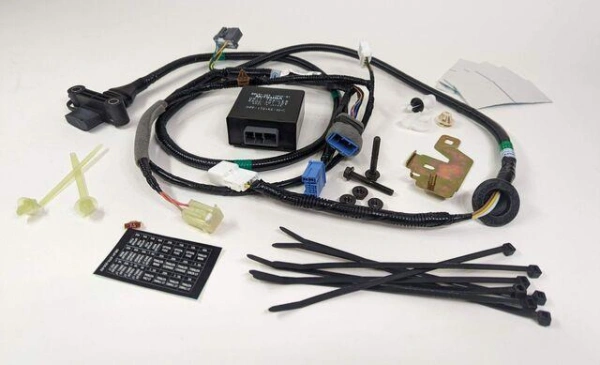
1. OEM Channels
If your vehicle comes with a factory-installed Trailer Tow Package, or if it requires a high level of integration with the vehicle’s electronic systems, you should prioritize checking the automaker’s OEM channels, authorized dealers, or original equipment parts catalogs.
This approach is particularly suitable for new vehicles, those with complex vehicle electronics, vehicles that come with factory-installed towing interfaces, or if you wish to maintain an installation method as close to the original equipment as possible.
2. Specialized Trailer/Towing Parts Suppliers
If you need a vehicle-specific wiring harness, a 4-way flat connector, a 7-way connector, a T-connector, or a wiring harness with a converter module, then a specialized trailer/towing parts supplier may be the better choice.
CURT’s vehicle-specific wiring harnesses feature a T-connector design that allows for direct connection to the vehicle’s existing wiring, eliminating the need to cut or splice the original wiring when the harness is compatible.
3. Auto Parts Retailers
You can also purchase trailer wiring harnesses from major auto parts retailers. They may filter products by:
Year → Make → Model → Configuration.
Important note: Do not completely ignore the product description. Especially when certain vehicle models have different configurations, factory-installed towing kits, or varying taillight circuit designs, be sure to double-check the product’s fitment.
4. General E-commerce Platforms
General e-commerce platforms such as Amazon and eBay also offer a wide selection of trailer wiring harnesses, including 4-pin and 7-pin harnesses, extension cables, universal harnesses, and model-specific T-connectors.
The biggest advantage of this channel is its competitive pricing, ample inventory, and wide variety of products; however, it is also the channel where it’s easiest to make a wrong purchase.
Questions to ask before ordering
| Pre-Order Check | Key Details | Why It Matters |
|---|---|---|
| Vehicle Compatibility | Make, model, year, trim, and tow package. | Ensures the harness fits the vehicle. |
| Trailer Functions | Lights, reverse lights, electric brakes, auxiliary power. | Determines the required circuits. |
| Connector Type | 4-pin/7-pin and plug/socket type. | Ensures proper physical connection. |
| Pinout | Function assigned to each pin. | Prevents incorrect circuit connections. |
| Connection Method | Plug-and-play, T-Connector, or splice-in. | Determines installation method and wire cutting. |
| Converter / Tow Module | Check whether a converter or tow module is required. | Some vehicles cannot accept direct splicing. |
| Wire Gauge | Wire size, circuit length, and load. | Helps prevent voltage drop and overload. |
| Circuit Protection | Fuse or circuit breaker configuration. | Protects against overloads and short circuits. |
| Connector Quality | Sealing, locking, terminals, and corrosion resistance. | Improves long-term connection reliability. |
| Operating Environment | Water, mud, salt, vibration, and heat. | Determines the required harness protection. |
Common buying mistakes
A common problem when purchasing trailer wiring harnesses is buying one that looks like it should fit but doesn’t actually match.
| Common Buying Mistake | Why It Happens | Correct Approach |
|---|---|---|
| Choosing by 4-Pin / 7-Pin Only | Matching pin counts do not guarantee matching pin functions. | Confirm the connector type and pinout. |
| Providing Only the Vehicle Brand | Different models, years, and trims may use different harnesses. | Provide make, model, year, trim, and tow package. |
| Checking Only Plug Fit | Physical fit does not guarantee electrical compatibility. | Verify the function of each pin. |
| Assuming Universal Fits Every Vehicle | Modern vehicles may require converters or dedicated modules. | Check the vehicle's electrical system first. |
| Wiring by Color Only | Wire colors can vary between manufacturers. | Follow the wiring diagram and verify circuit functions. |
| Installing a Larger Fuse | A higher rating can compromise circuit protection. | Check the load, wiring, and specified protection rating. |
| Choosing by Wire Gauge Only | Wire size depends on current, length, and voltage drop. | Consider load, circuit length, and wire gauge together. |
| Assuming a Waterproof Connector Makes the Harness Waterproof | Splices, branches, sheaths, and pass-throughs can still admit water. | Check sealing and protection throughout the harness. |
| Ignoring Grounding | Poor grounding can affect multiple lighting functions. | Use a reliable ground and remove paint or corrosion. |
| Comparing Price Only | Low-cost products may lack fitment, pinout, or installation data. | Choose suppliers providing fitment, pinout, specs, and instructions. |
Frequently asked questions about choosing a trailer harness
Q1: Can a universal harness fit any vehicle?
No. The Universal Harness is only compatible with a specific range of vehicles. You’ll need to verify the model, year, vehicle electrical system, connectors, and whether an adapter module is required.
Q2: Do I need a powered converter?
Not necessarily. If the vehicle can directly provide compatible trailer light signals, one may not be needed; however, if the vehicle uses a complex electronic lighting system or has limited output capacity, a powered converter may be required. This should be determined based on the specific vehicle model and wiring harness configuration.
Q3: Should I buy a complete kit or separate components?
We recommend choosing a complete kit whenever possible. If the kit already includes matching connectors, wiring harnesses, adapter modules, and mounting accessories, it can help minimize compatibility issues. Purchasing components separately is only recommended if you have confirmed that the specifications of each component are a perfect match, or if you require custom lengths, connectors, or features.
Q4: Can I reuse an old trailer connector?
Yes, but it needs to be inspected first. If the old connector shows no obvious signs of corrosion, burn damage, looseness, cracks, or damaged terminals, and if the connector type and pin configuration match those of the new wiring harness, you may consider continuing to use it.
Conclusion: What Trailer Wiring Harness Do I Need for My Vehicle and Trailer?
Selecting the right wiring harness isn’t determined by the number of pins or price alone; rather, it requires a comprehensive evaluation of multiple technical factors, including trailer load requirements, vehicle electrical architecture, connector pin assignments, and the wire’s current-carrying capacity and voltage drop. For you, establishing a clear selection process can help reduce lighting malfunctions, module damage, and even driving safety hazards caused by incompatible wiring harnesses.
As a professional wiring harness solutions provider, Linkwings offers standardized trailer wiring harness products and also supports custom designs and end-to-end engineering services tailored to different vehicle models and trailer application scenarios. We help customers find the optimal solution that balances reliability and cost-effectiveness, from functional definition to final installation. Please feel free to contact us at any time!

Nicole
The founder of Linkwings Electronics.
10+ Years Experience | 1000+ Global Projects Completed
Specialized in:
- Custom Wire Harness Assembly
- Automotive & Industrial Cable Harness Manufacturing
- Precision Crimping & Terminal Processing
- OEM / ODM Wire Harness Solutions
Need help with your project?
Let Linkwingselec deliver your next wire harness solution.