
What Is a Trailer Wiring Harness and How Does It Work?
Home » What Is a Trailer Wiring Harness and How Does It Work?
A trailer wiring harness is the core of the trailer’s electrical system. It is a bundled set of wires that carries electrical signals between the tow vehicle and the trailer. The harness contains multiple color-coded wires, each serving a different function. Wiring requirements vary by trailer type. Small trailers usually need only basic lighting circuits, while larger trailers may also require wiring for electric brakes, auxiliary power, and other functions.
What parts make up a trailer wiring system?
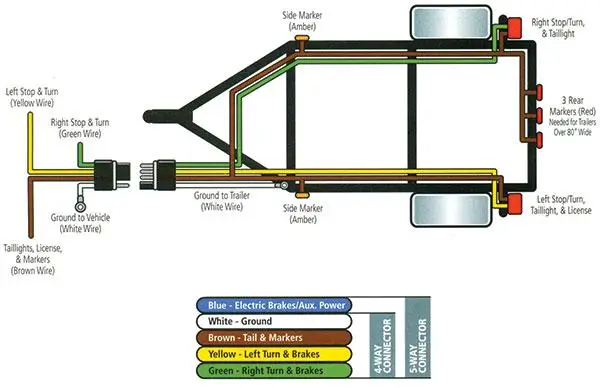
A trailer wiring system is a complete electrical connection system that transmits power and signals from the towing vehicle to the trailer’s lights and auxiliary equipment.
Simply put, you can see this system in action during your daily driving. When you press the brake pedal, turn on the turn signals, or activate the parking lights, the corresponding lights at the rear of the trailer illuminate simultaneously. This synchronized operation is made possible by the trailer wiring system.
The trailer wiring system primarily consists of the following seven components.
- Trailer wiring harness: This is the core component of the entire system. It transmits electrical signals between the tow vehicle and the trailer.
- Trailer connector plug: This serves as the interface connecting the tow vehicle and the trailer. It functions similarly to a power outlet, allowing for quick connection and disconnection of the two separate electrical systems.
- Vehicle-Side Wiring: Installed on the towing vehicle. Its primary function is to transmit the vehicle’s lighting and control signals to the trailer.
- Trailer-Side Wiring: Installed inside the trailer or on the trailer frame. Its primary function is to receive electrical signals from the towing vehicle and distribute them to the left taillight, right taillight, brake lights, turn signals, and other electrical devices.
- Converter Module: Resolves compatibility issues between the vehicle’s electrical system and the trailer’s wiring harness system.
- Ground Connection: All lights and electrical devices require a complete circuit to function properly. The ground wire provides a path for current to return to the vehicle’s electrical system.
- Protective Components: Professional trailer wiring systems include various protective components to enhance durability and reliability.
The complete signal path of a trailer wiring system is as follows:
Towing vehicle → Vehicle-side wiring harness → Converter module (required only for some vehicles) → Trailer connector plug → Trailer-side wiring harness → Trailer lights and other electrical devices.
Vehicle-side harness and converter module
The vehicle-side wiring is installed on the tow vehicle and connects to the tail lights, brake lights, turn signals, and vehicle power system. When you press the brake pedal or operate the lights, it receives the vehicle’s electrical signals and sends them to the trailer.
The converter module works like a signal translator between the vehicle and the trailer. Many modern vehicles use LED lighting, CAN Bus communication systems, and low-current electronic controls that may not be directly compatible with standard trailer wiring. A direct connection can cause lighting problems, dashboard warnings, or electrical faults.
The converter module receives signals from the vehicle-side wiring, converts them into outputs that the trailer can use, and then sends them to the trailer wiring system. This helps the vehicle and trailer electrical systems work together safely and correctly.
Trailer-side harness, junction box and branch circuits
The trailer-side wiring harness is installed along the trailer frame or inside the trailer. It carries electrical signals from the tow vehicle to the junction box, which then distributes them through branch circuits to the left and right tail lights, brake lights, turn signals, and other electrical equipment.
Because trailers are exposed to rain, mud, road salt, sunlight, and temperature changes, the harness needs a durable outer jacket with good water resistance, abrasion resistance, UV resistance, and mechanical strength. Industrial trailers usually use higher-quality wires and protective materials to reduce the risk of broken conductors and corrosion during long-term use.
How does a trailer wiring harness work?
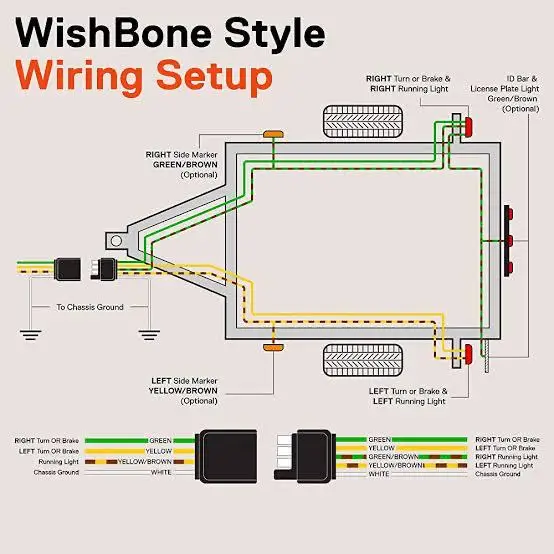
The trailer wiring harness is the core of the trailer electrical system. It connects the electrical signals between the tow vehicle and the trailer. The harness uses multiple color-coded wires to carry signals for different functions.
Each wire has a specific purpose. For example, the tail light wire controls the trailer’s tail and running lights, the brake light wire carries the braking signal, the turn signal wires control the left and right turn signals, the ground wire provides the electrical return path, and the electric brake wire connects to the trailer’s electric braking system.
However, wiring requirements vary depending on the type of trailer. Small trailers may only need basic lighting circuits, while RVs and large cargo trailers often require additional circuits for electric brakes, auxiliary power, and other functions. Therefore, the wiring harness should be configured according to the trailer’s actual electrical requirements.
What are the main types of trailer wiring harnesses?
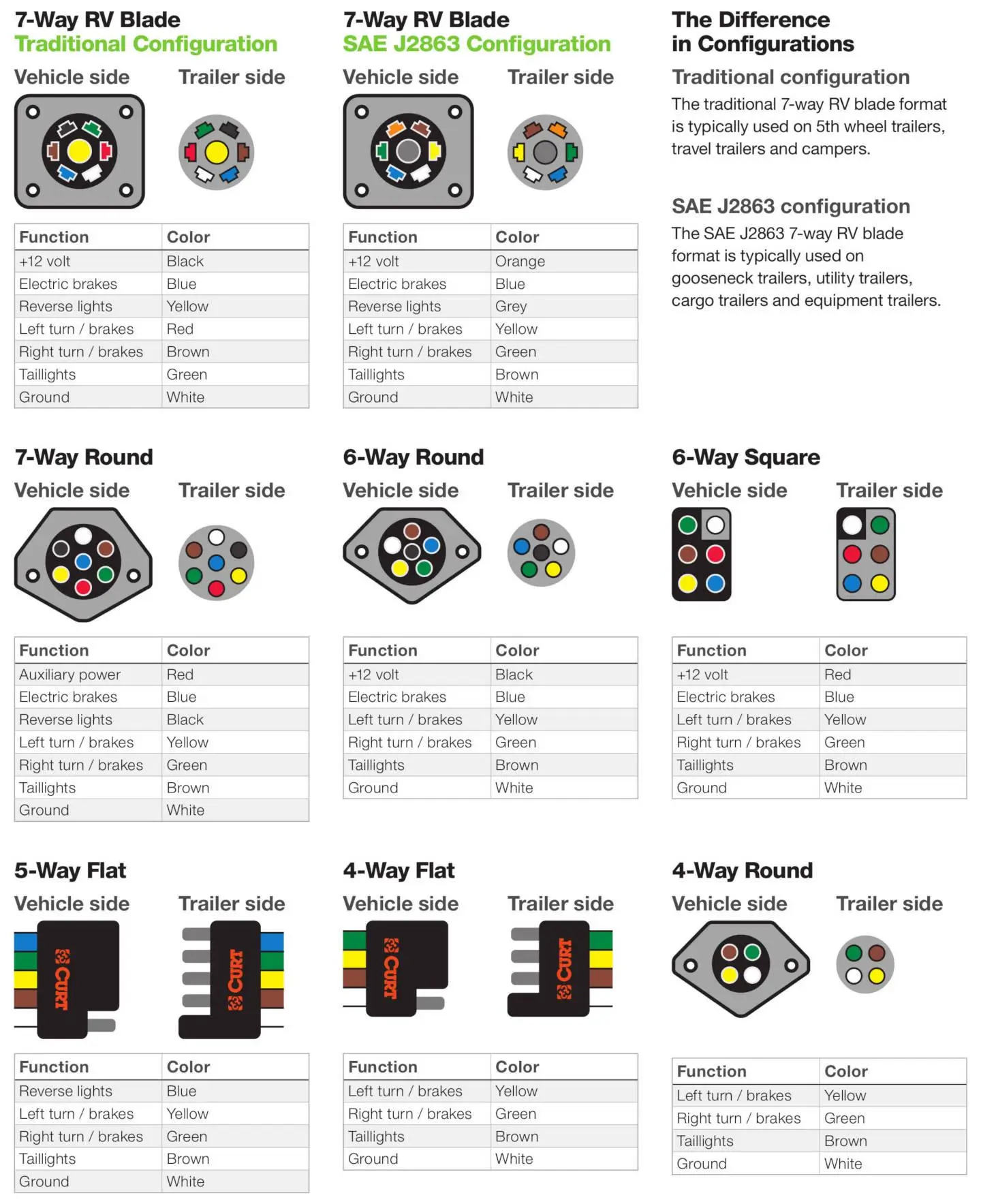
By connector type, trailer wiring harnesses can be classified as 4-way flat harnesses, 5-way harnesses, 6-way harnesses, 7-way blade harnesses, and 7-way round harnesses.
By connector design, they include flat trailer wiring harnesses, round trailer wiring harnesses, and blade-style trailer wiring harnesses.
By installation method, they include custom-fit harnesses, universal trailer wiring harnesses, splice-in harnesses, and plug-and-play harnesses.
By wiring layout, they include wishbone harnesses, crossover harnesses, straight-through harnesses, and split harnesses.
By function, they include basic lighting harnesses, electric brake harnesses, RV wiring harnesses, boat trailer wiring harnesses, and heavy-duty trailer wiring harnesses.
By connection position or purpose, they include vehicle-side harnesses, trailer-side harnesses, extension harnesses, and adapter/converter harnesses.
By protection level, they include standard harnesses, waterproof harnesses, and heavy-duty protected harnesses.
4-way flat harnesses
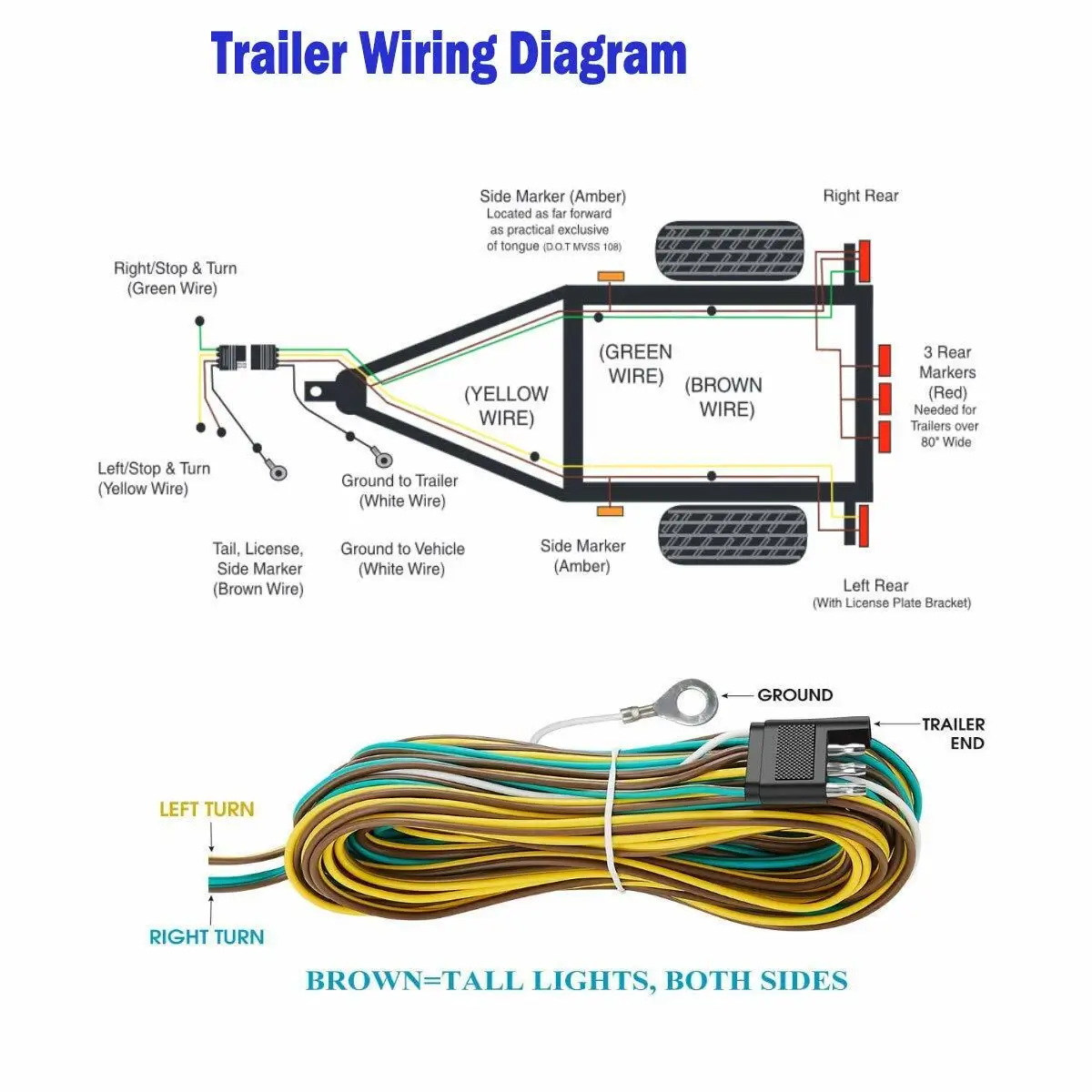
A 4-way flat trailer wiring harness is one of the most common and basic types of trailer wiring harnesses. It contains four color-coded wires. The white wire is used for ground, the brown wire controls the tail and running lights, the yellow wire controls the left turn signal and left brake light, and the green wire controls the right turn signal and right brake light.
The 4-way flat harness is mainly used on small trailers, such as utility trailers and motorcycle trailers. Its advantages include a simple design, easy installation, and relatively low cost. If your trailer only requires basic lighting functions, a 4-way harness is usually sufficient.
However, its functionality is limited. It cannot directly support electric trailer brakes, reverse lights, or other auxiliary circuits. If you have a heavier trailer or need more electrical functions, a 4-way harness may not meet your requirements.
5-way and 6-way harnesses
A 5-way trailer wiring harness adds one circuit to the basic 4-way harness. It retains the white, brown, yellow, and green wires and adds a fifth wire, commonly blue, for functions such as reverse lockout or another auxiliary circuit. It is commonly used on boat trailers. Compared with a 4-way harness, a 5-way harness provides an additional control function, but it still cannot meet all the electrical requirements of larger or more complex trailers.
A 6-way trailer wiring harness provides six circuits. In addition to the basic lighting and ground circuits, it can support electric trailer brakes and a 12V auxiliary power circuit. It is commonly used on horse trailers, enclosed cargo trailers, and similar applications. Compared with a 5-way harness, it can support electric brake control, auxiliary power, and additional electrical equipment. However, 6-way configurations are less standardized than 7-way RV-style systems, and the exact pin functions and wire colors can vary, so the connector wiring diagram should always be checked before installation.
7-way blade and 7-way round harnesses
A 7-way blade trailer wiring harness is one of the most common connector systems used for larger trailers in North America. It provides a complete range of circuits, including ground, tail/running lights, left and right turn/brake signals, electric trailer brakes, reverse lights, and 12V auxiliary power. The 7-way blade design is widely used and highly compatible with many towing vehicles and trailers.
A 7-way round-pin trailer wiring harness provides a similar range of electrical functions, but uses round pins instead of flat blade-style contacts. Its robust connector design can provide good mechanical strength and vibration resistance, making it suitable for commercial and heavy-duty applications. However, 7-way round-pin connectors are generally less common than 7-way blade connectors in typical North American consumer towing applications, so compatible replacement parts and adapters may be less readily available.
Custom-fit, splice-in, crossover and wishbone harnesses
A custom-fit trailer wiring harness is designed specifically for a particular vehicle model. The connectors, wire lengths, and mounting points are matched to the vehicle, allowing the harness to be installed without cutting or splicing the factory wiring. Its main advantages are faster installation, minimal modification to the original wiring, a cleaner installation, and better long-term reliability. For vehicle manufacturers and professional installers, a custom-fit harness is often the preferred solution.
A splice-in trailer wiring harness requires connecting the new harness directly to the vehicle’s existing wiring. During installation, the installer identifies the appropriate tail light and signal wires, removes part of the insulation, and connects the trailer harness to them. Its advantages are broad vehicle compatibility, lower cost, and flexible installation. However, proper electrical knowledge and sealing techniques are important. Poorly made splices can allow moisture to enter, leading to corrosion, poor electrical contact, and lighting failures. Depending on the vehicle and installation method, modifying factory wiring may also affect warranty coverage. Splice-in harnesses are commonly used on older vehicles or vehicles without a dedicated plug-and-play wiring kit.
A crossover harness runs the main wiring from the trailer connector toward the center or rear of the trailer, where the wiring branches to the left and right lights. This layout is relatively simple and can reduce the amount of wire required. It is commonly suitable for shorter trailers such as small utility trailers and compact flatbed trailers.
A wishbone harness splits into two separate wiring branches near the trailer connector, with one branch running down each side of the trailer. Unlike a crossover harness, which branches farther back along the trailer, a wishbone harness separates near the front. This makes the wiring layout clear, reduces unnecessary cross-trailer wiring, and can simplify installation on longer trailers. Wishbone harnesses are commonly used on boat trailers, travel trailers, and longer cargo trailers.
Trailer wiring harness vs connector, adapter and brake controller
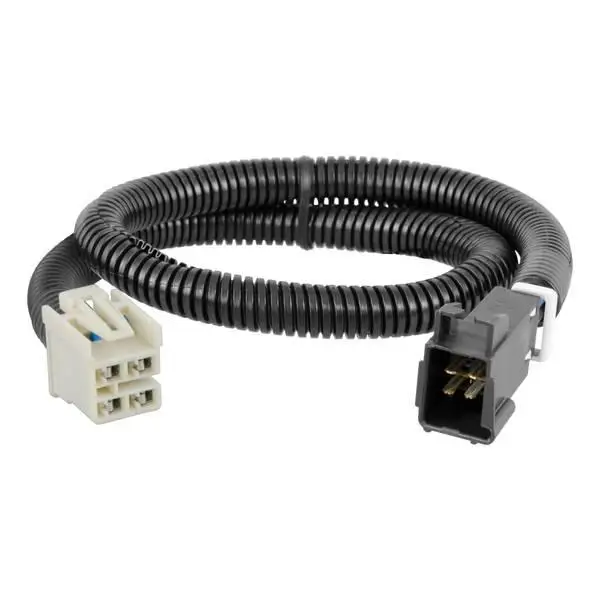
Many people confuse these components, but they perform different functions.
A trailer wiring harness is the complete set of wires that carries electrical signals between the tow vehicle and the trailer. It transmits signals for functions such as tail lights, brake lights, and turn signals.
A trailer connector is the plug-and-socket interface you can physically see. One side is installed on the tow vehicle and the other on the trailer. When connected, it creates the electrical connection between the two systems.
A trailer adapter is used when the vehicle and trailer connectors are different types. For example, if your vehicle has a 4-way connector but the trailer has a 7-way connector, an appropriate adapter can make the physical and electrical connection possible. However, an adapter does not automatically add functions that are not present in the vehicle-side wiring.
A brake controller is specifically used to control a trailer’s electric brakes. Basic trailer lighting does not require one. If your trailer is equipped with electric brakes, a compatible brake controller may be required so that the trailer braking system responds appropriately when the tow vehicle brakes.
Which standards and color conventions apply?
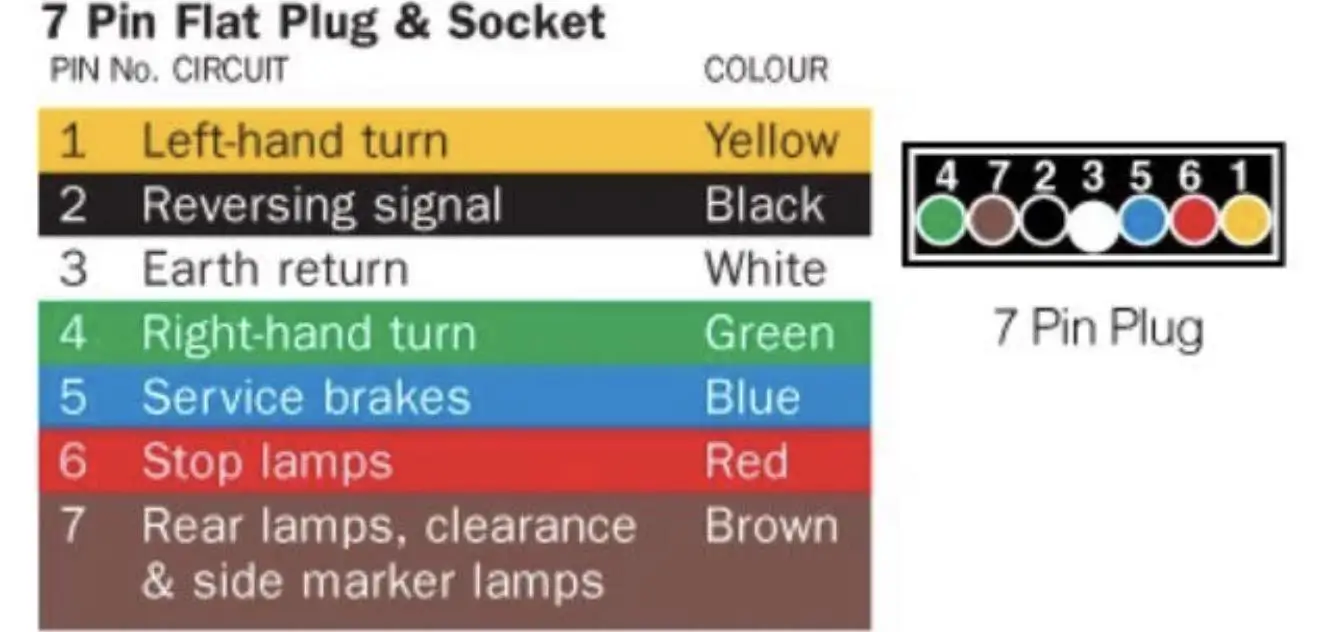
Trailer wiring harnesses generally follow common industry color conventions, especially in North America. Different wire colors are used for different electrical functions.
White is typically used for ground, providing the return path for the electrical circuit. Brown is commonly used for tail lights, running lights, and marker lights. Yellow usually controls the left turn signal and left brake light, while green controls the right turn signal and right brake light. Blue is commonly used for electric trailer brakes, and black is typically used for 12V auxiliary power. Red may be used for reverse lights or another auxiliary circuit, depending on the specific wiring system.
Because wire colors can vary between manufacturers and connector standards, you should always check the wiring diagram before installation.
When does a trailer need a wiring harness upgrade?
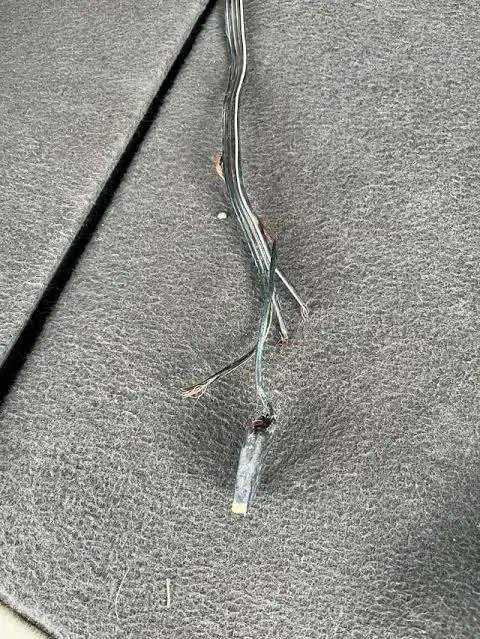
The original wiring harness may no longer meet the trailer’s electrical or operating requirements. For example, an upgrade may be needed when adding electric trailer brakes or additional electrical equipment, when the existing wiring has become corroded, or when a heavy-duty trailer requires a more durable and abrasion-resistant wiring harness.
Frequently asked questions about trailer wiring harnesses
Does every trailer need a wiring harness?
Yes. Any trailer used on public roads generally needs a wiring system so its required lights can operate properly. Road-going trailers typically need functions such as brake lights, turn signals, and tail or marker lights, although exact legal requirements vary by location.
The wiring harness carries lighting signals from the tow vehicle to the trailer. Without it, the trailer lights may not work, meaning other drivers cannot clearly see when you are braking, turning, or driving at night, which creates a serious safety risk.
Is a trailer harness universal?
Trailer wiring harnesses are not universal and should not be used interchangeably without checking compatibility. When selecting a harness, you need to consider the connector type, number of pins or circuits, electrical system, and the trailer’s power requirements.
For example, a 4-way flat wiring harness cannot directly replace a 7-way RV-style harness because it does not provide the additional circuits required for functions such as electric brakes, 12V auxiliary power, and reverse lights.
Can a 7-way harness work with a 4-way trailer?
Yes, it can be connected, but you need an appropriate adapter:
7-way vehicle connector → adapter → 4-way trailer connector
However, the additional circuits available on the 7-way connector, such as electric trailer brakes, 12V auxiliary power, and reverse lights, will not be used by a standard 4-way trailer. The 4-way connection will only provide the basic lighting functions.
What gauge wire is used in a trailer harness?
Wire size mainly depends on two key factors: the amount of current the circuit carries and the length of the wire run.
- 18 AWG: light-duty basic lighting circuits
- 16 AWG: common trailer lighting circuits
- 14 AWG: higher-current circuits, including some brake circuits
- 12 AWG: higher-current auxiliary power circuits
When selecting wire size, you should consider current load, wire length, acceptable voltage drop, and the operating environment.
For long wire runs or heavy-duty trailers, a larger wire size may be required to reduce voltage drop and prevent excessive wire heating. Always size the wire according to the actual circuit load and equipment requirements.

Nicole
The founder of Linkwings Electronics.
10+ Years Experience | 1000+ Global Projects Completed
Specialized in:
- Custom Wire Harness Assembly
- Automotive & Industrial Cable Harness Manufacturing
- Precision Crimping & Terminal Processing
- OEM / ODM Wire Harness Solutions
Need help with your project?
Let Linkwingselec deliver your next wire harness solution.